

Wood vs. Vinyl Pavilions: Which Is Right for You?
|A pavilion needs to look appealing in the space, match the setting, support the intended use, and fit the level of maintenance the property owner wants to handle over time. If you’re choosing between wood and vinyl pavilions, here are some of the differences and how to choose which is right for you.
Start With the Purpose of the Pavilion
Every pavilion project begins with a simple question: how will you use the structure? Some buyers want a shaded area for outdoor dining, while others need a centerpiece for a landscape design, a poolside retreat, or a gathering space for guests.
Use matters because the different material options support different priorities. Wood often appeals to buyers who want a natural look and more traditional character, while vinyl usually fits buyers who want easier upkeep and a cleaner, more uniform finish.
Why Wood Pavilions Appeal to So Many Buyers
Wood pavilions remain popular because they bring warmth and texture to an outdoor space. Natural grain, rich color variation, and solid craftsmanship create a classic appearance that works well in rustic, traditional, and upscale residential settings.
A wood pavilion also gives landscapers and property owners a strong design statement. In many projects, wood feels more integrated with gardens, stone patios, mature trees, and natural surroundings.
Customization also plays a major role in the appeal of wood. Stains, paint colors, roof styles, and trim details can help shape a pavilion that looks tailored to the property.
The Strengths of a Wood Pavilion
For buyers who want a structure that feels substantial and timeless, wood often checks that box better than synthetic-looking alternatives. Wood suits projects where craftsmanship matters as much as function. Gazebo Depot highlights Amish-made structures and quality materials, which align well with the expectations many buyers bring to wood pavilion projects.
Another advantage involves design flexibility. Wood works well with many architectural styles, from farmhouse and cottage homes to parks, resorts, and event venues that want a more traditional outdoor setting.
The Trade-Offs That Come With Wood
Wood requires more attention over time. Owners need to monitor finish wear, moisture exposure, and general weathering if they want the pavilion to keep its appearance and perform well year after year.
That upkeep does not make wood a poor choice. It simply means wood works best for buyers who value natural beauty enough to support regular care.
Why Vinyl Pavilions Stand Out
A vinyl pavilion appeals to buyers who want a clean, polished structure with less routine maintenance. Vinyl wrap and finish details help create a finished look that stays neat with less hands-on effort, which makes it attractive for busy homeowners and commercial properties alike.
Vinyl also fits projects where ease matters. Landscapers working with clients who want visual appeal without ongoing maintenance often point toward vinyl for that reason. Vinyl looks crisp, bright, and refined, especially on properties with more contemporary or low-maintenance landscape plans.
The Strengths of Vinyl for Long-Term Convenience
Low maintenance remains the biggest reason many buyers choose vinyl. Routine cleaning typically keeps the pavilion looking sharp, which helps reduce the time and effort needed to preserve curb appeal.
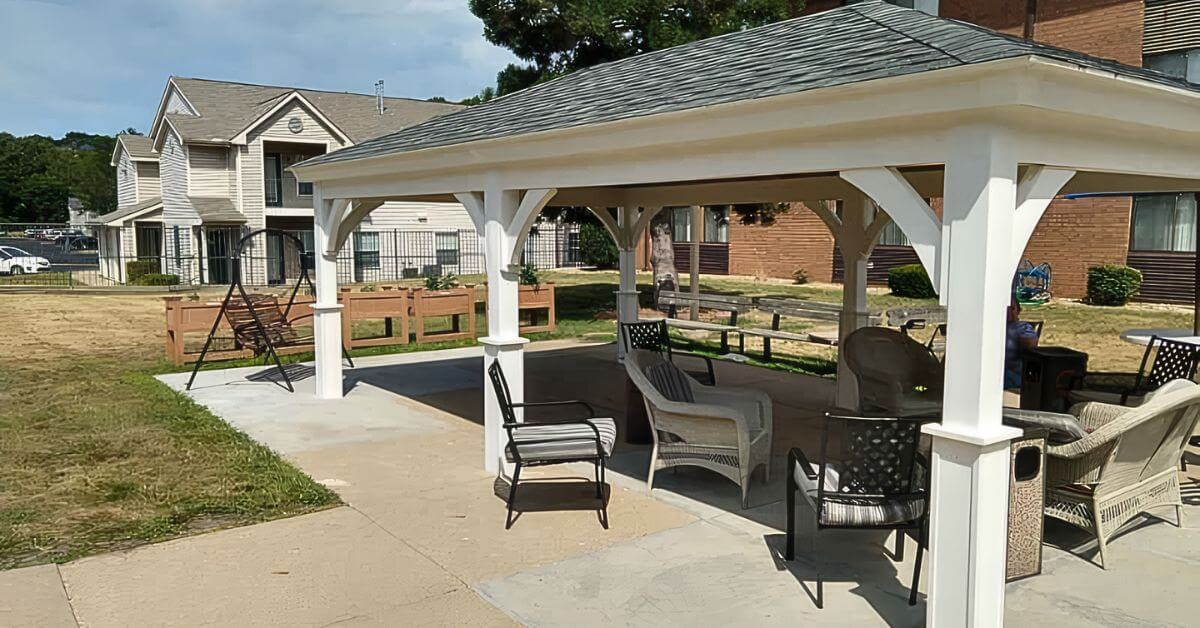
That benefit matters even more for large properties and shared-use spaces. Resorts, parks, nursing homes, and event venues often need structures that look good without adding major upkeep demands to the maintenance schedule.
Vinyl also offers consistency. Buyers who want a uniform finish and a structure that maintains a tidy appearance across changing seasons often appreciate that predictability.
The Limits of Vinyl Compared With Wood
Vinyl does not offer the same natural texture or handcrafted visual depth as wood. Buyers who want authentic grain, stain options, or a more organic look may find wood more appealing.
Customization can also feel different with vinyl. While vinyl pavilions still offer attractive options, the design expression often leans cleaner and more restrained than the character-rich look that wood can provide.
Key Questions to Ask Before Deciding
The best pavilion material usually becomes clear after a few practical questions. These points can help narrow the decision without overcomplicating the project:
- Does the property need a natural, traditional look or a crisp, low-maintenance finish?
- Will the owner handle regular upkeep, or does the structure need easy care?
- Does the pavilion serve a private backyard, a client landscape plan, or a commercial site?
- Which choice fits the long-term budget, not just the initial purchase?
These questions help move the conversation from preference to practicality.
Which Material Works Best for Homeowners
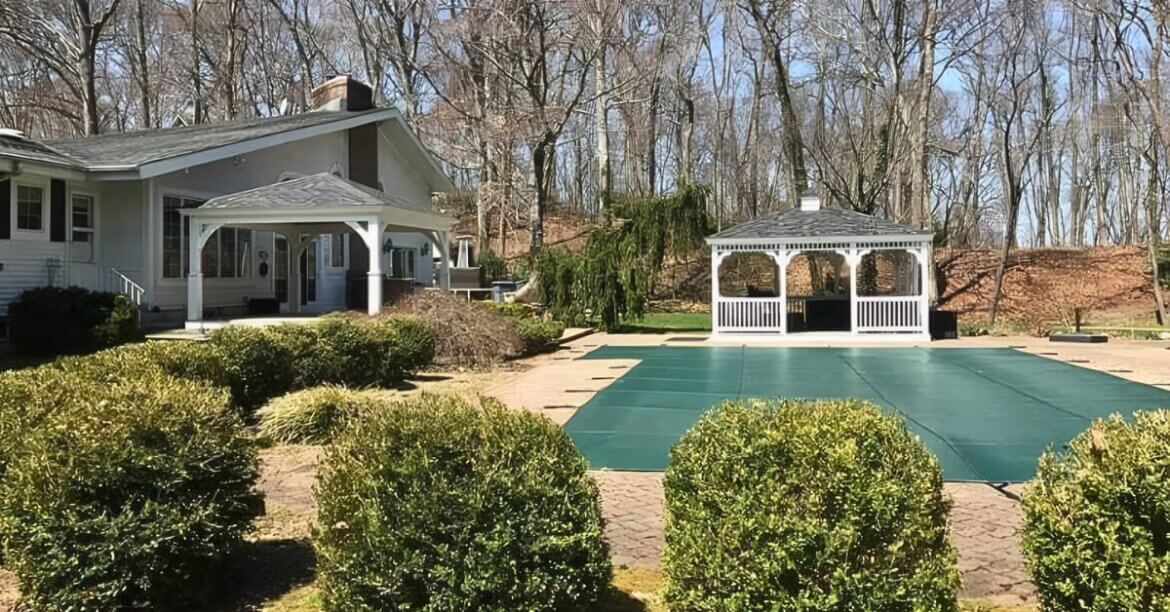
Homeowners often choose wood when they want a backyard structure with warmth and character. A wood pavilion can anchor a patio, frame a pool area, or create a more natural extension of the home.
Vinyl pavilions often work better for homeowners who want a simpler ownership experience. For busy households or second homes, lower maintenance can outweigh the appeal of natural wood grain.
The right answer depends on priorities. A homeowner who values craftsmanship and traditional style may lean toward wood, while one who values convenience may prefer vinyl.
Which Material Works Best for Landscapers and Contractors
Landscapers need to think beyond the structure itself. Material choice affects installation planning, long-term owner satisfaction, visual harmony, and the overall success of the outdoor design.
Wood often works best in custom landscape plans where natural materials already shape the design. Stonework, timber accents, and garden-focused layouts usually pair well with the depth and texture of wood.
Vinyl often suits clients who want a polished finished product with fewer maintenance concerns after installation. That makes it especially useful for projects where simplicity, consistency, and long-term convenience drive the decision.
Making Your Choice Between Wood vs. Vinyl
Wood and vinyl both offer real value, but they serve different goals. Wood delivers natural beauty, stronger traditional character, and a more handcrafted look, while vinyl delivers easier maintenance, a clean finish, and everyday practicality.
Neither option wins in every situation. Choosing between wood and vinyl pavilions depends on the style of the property, the expectations for upkeep, and the long-term purpose of the structure.
For buyers who want help comparing options, Gazebo Depot offers outdoor structures designed for both beauty and durability, backed by experience serving homeowners and commercial buyers nationwide. Explore Gazebo Depot’s pavilion structures to find the right fit for your property and long-term vision for the space.