

Brighten Your Space With These 7 Pavilion Lighting Ideas
|Planning around those needs before choosing fixtures can prevent the space from becoming uniformly bright or leaving important areas poorly lit. These pavilion lighting ideas to brighten your space address seven distinct lighting decisions, giving homeowners practical ways to plan illumination around their pavilion and evening routines.
1. Add Overhead Lighting for General Visibility
When one fixture needs to illuminate a substantial portion of the pavilion, overhead lighting provides a practical foundation. A centrally positioned fixture can spread light across the main gathering area without requiring several competing light sources throughout the structure.
Fixture scale should correspond with both the pavilion and the open area beneath its roof. A light that appears proportionate in a smaller setting may look undersized beneath a broad pavilion, while an oversized fixture can compete visually with exposed beams and other architectural details.
As homeowners compare overhead options, they should consider how much general illumination the pavilion needs before adding more specialized lighting. Establishing that baseline makes it easier to identify areas that need a different type of light for a specific purpose.
2. Focus Task Lighting Around Activity Areas
Although general lighting can illuminate the pavilion as a whole, food preparation or serving areas may need more concentrated light. Directing additional illumination toward these working surfaces can improve visibility without requiring homeowners to brighten the entire structure to the same level.
For homeowners considering white vinyl pavilion kits, identifying planned work areas early can help determine where task lighting may belong within the finished space. Homeowners should base fixture placement and installation decisions on the pavilion specifications and applicable manufacturer guidance.
3. Use Pendant Lights to Define a Dining Area
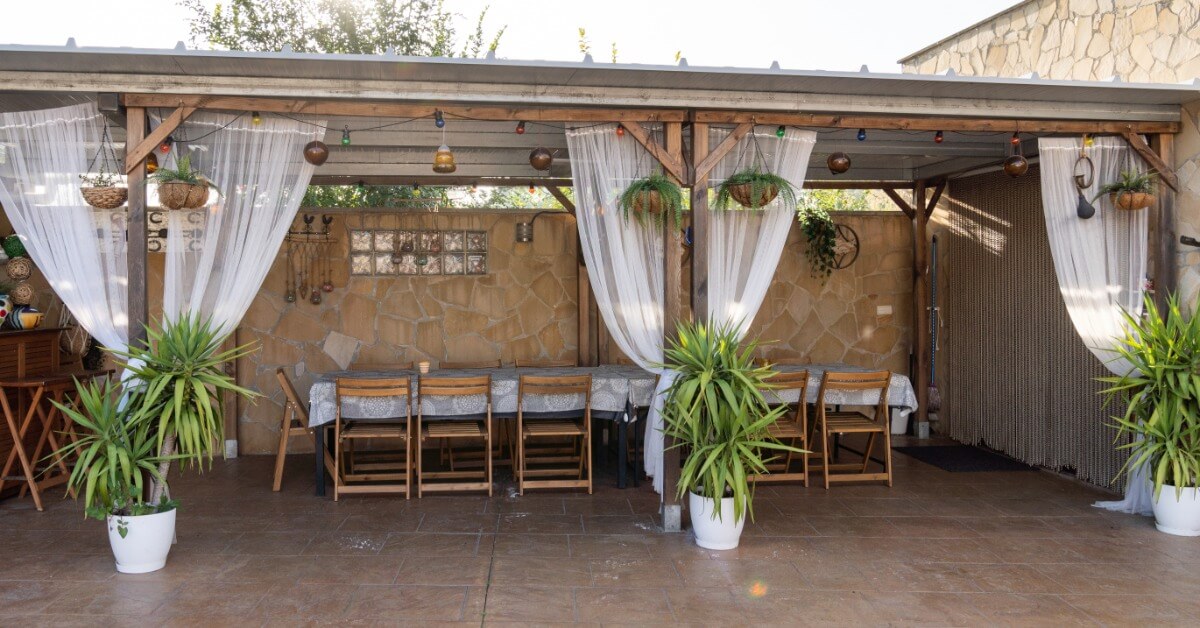
When a dining table serves as the pavilion’s main gathering point, pendant lighting can distinguish that area from the surrounding covered space. Positioning a fixture in relation to the table creates a focal point while directing attention toward the place where people gather for meals.
Because roof height affects how a hanging fixture relates to the space below, homeowners should consider the available vertical clearance when comparing pendant designs. The fixture needs to complement the dining area without interfering with sightlines or making the space beneath the roof feel crowded.
Beyond providing light over the table, a pendant can contribute to the pavilion’s overall character. Choosing a fixture that relates to nearby furnishings or architectural details can make the dining area feel intentionally connected to the larger outdoor setting.
4. Introduce String Lights for Softer Ambiance
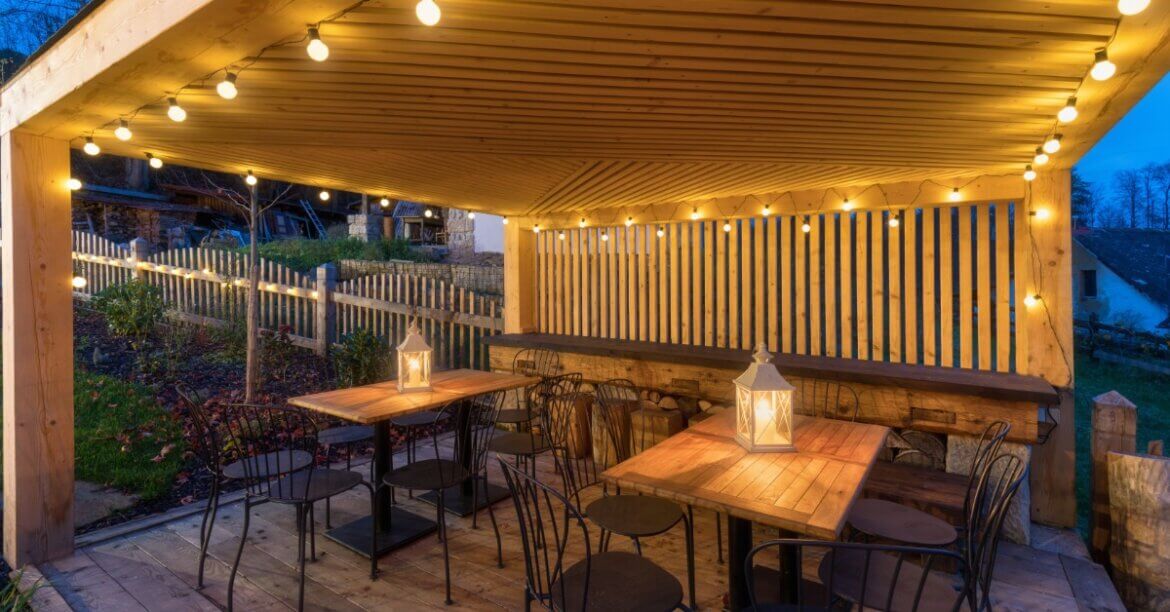
For evenings centered more on conversation than detailed tasks, string lights can create softer illumination beneath the pavilion. Their smaller points of light add visual warmth around gathering areas without asking one prominent fixture to create the entire nighttime atmosphere.
Because the arrangement of each strand affects how the lighting reads across the structure, homeowners should consider the pavilion’s architectural lines before deciding where string lights belong. Following beams or other natural structural paths can produce a more intentional appearance than covering every available section of the roof.
5. Highlight Pavilion Features With Accent Lighting
While task and general lighting support activities beneath the roof, accent lighting serves a different purpose by drawing attention to the pavilion itself. Carefully positioned light can emphasize a distinctive post, an exposed section of the roof, or another architectural detail homeowners want to remain visible after dark.
Since illuminating too many features can weaken the effect, homeowners can reserve accent lighting for the structural details that contribute most to the pavilion’s character. This selective approach allows architectural lighting to complement the main gathering space instead of competing with it.
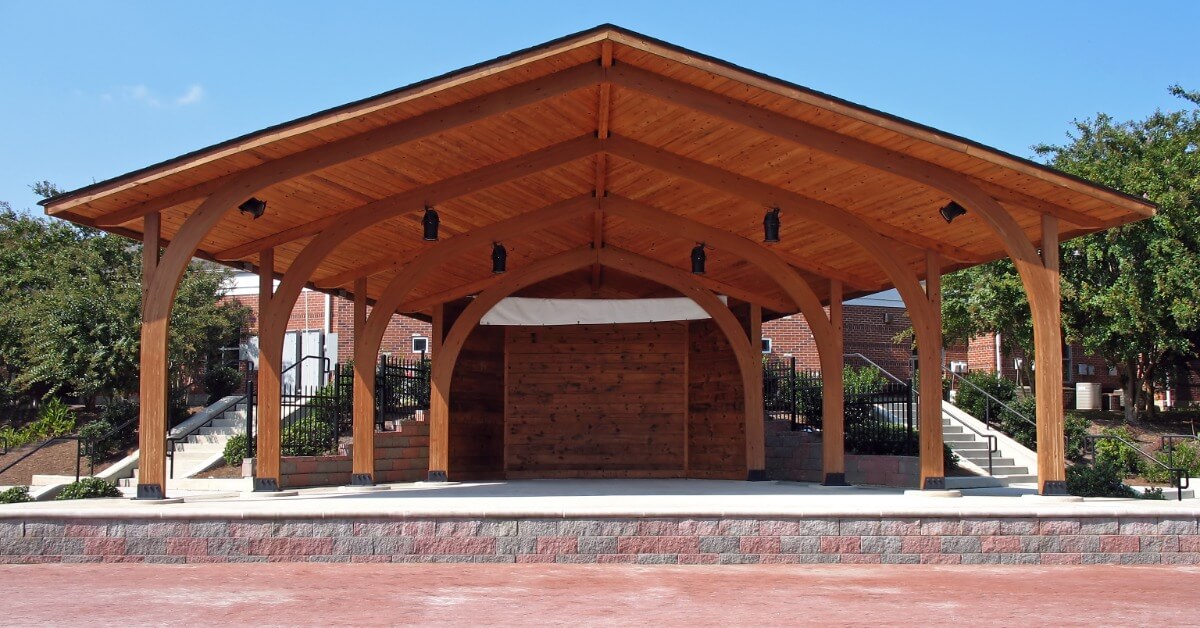
Viewing the pavilion from elsewhere on the property can help determine which features deserve emphasis. An architectural detail that appears subtle from beneath the roof may become much more prominent when homeowners see the illuminated pavilion from the house or another outdoor area.
6. Add Low-Level Lighting Around the Pavilion
Because evening use includes approaching and leaving the pavilion, the lighting plan shouldn’t stop at the edge of the roof. Lower-level illumination near the immediate approach can help visually connect the covered structure with the surrounding outdoor space after sunset.
Existing exterior lights may already illuminate portions of that transition, so homeowners can evaluate the property after dark before adding more fixtures. Concentrating new lighting where the pavilion connects with its immediate surroundings keeps this layer focused on access instead of turning it into a broader landscape-lighting plan.
7. Use Dimmers To Adjust the Lighting Level
When a pavilion serves different purposes throughout an evening, the amount of light that works during one activity may feel excessive during another. Compatible dimming controls can give homeowners more flexibility by allowing suitable fixtures to provide brighter illumination when needed and a lower level when the activity changes.
Rather than creating separate lighting arrangements for every occasion, homeowners can use adjustable intensity to make existing fixtures work across more than one setting. A brighter level may suit active use earlier in the evening, while reduced illumination can create a quieter atmosphere once people settle into conversation.
Before incorporating dimming into a lighting plan, homeowners should confirm that the selected fixtures and related components support the intended controls. Following product specifications keeps this decision tied to the lighting equipment homeowners actually choose instead of assuming every fixture offers the same functionality.
Brighten Your Pavilion Around the Way You Use It
A useful pavilion lighting plan gives each light source a defined job instead of asking every fixture to illuminate the space in the same way. General lighting can establish visibility, while more specialized choices can address individual activities, architectural features, or the atmosphere homeowners want to create after sunset.
Using these pavilion lighting ideas to brighten your space as a planning framework can help homeowners decide which lighting approaches fit the way they expect to use their covered area. Selecting fixtures around those priorities can create a more adaptable pavilion without filling the structure with unnecessary lighting.
Gazebo Depot offers vinyl pavilions for homeowners planning covered spaces for outdoor dining and entertaining. Browse Gazebo Depot’s vinyl pavilions to consider options for your outdoor space.