

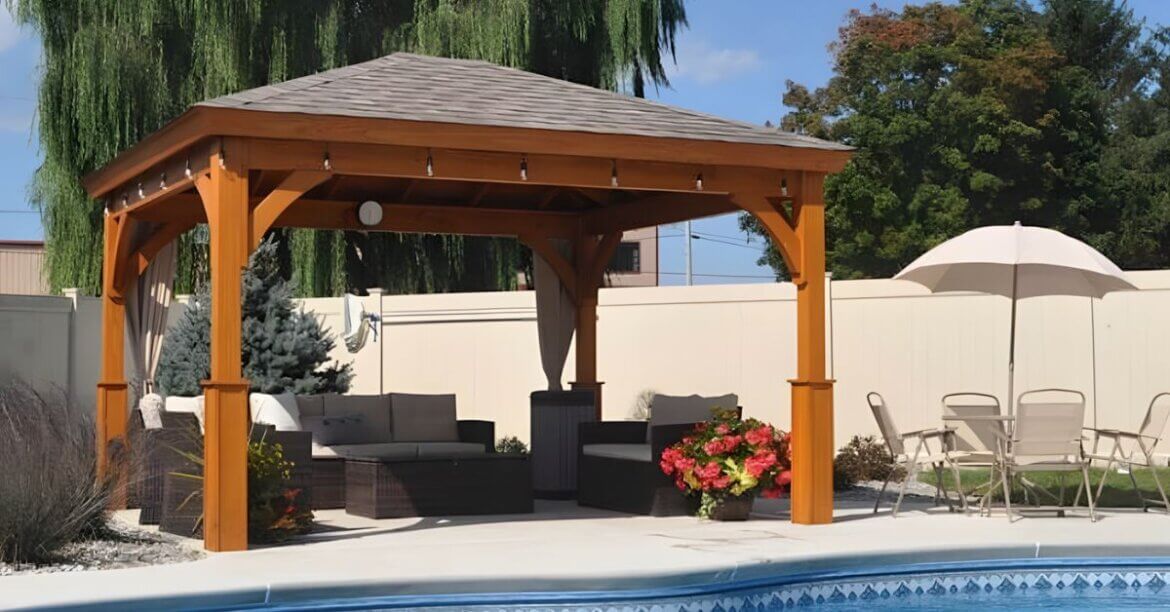
How to Hang Lights on a Gazebo for a Cozy Glow
|Outdoor lighting can turn a gazebo into the perfect space to relax after sunset. With the right layout and weather-safe products, homeowners can create a comfortable setting for gatherings or simply quiet evenings at home.
A gazebo already adds shelter, structure, and visual appeal to an outdoor area. Lighting helps define the space and improve visibility without requiring a major backyard update. This guide will walk you through how to hang lights strategically in your gazebo to create a cozy nighttime space.
Start With a Lighting Plan
A good lighting plan starts with the way you use the gazebo. Dining areas need enough light for meals, while lounge areas usually need softer light around the edges.
The gazebo size and shape also matter. An octagon, rectangle, oval, or square structure may call for a different lighting pattern, so the layout should follow the roofline and posts for proper lighting.
Homeowners should also look at nearby power sources before buying lights. A plan that factors in outlet location and cord length helps prevent messy wiring and uneven placement.
Choose the Right Type of Gazebo Lights
String lights remain one of the most common options for gazebo lighting. They work well along rafters, under the roofline, or across open sections where a soft, even glow makes the space feel more inviting.
Pendant lights and small chandeliers can work well in the center of a larger gazebo. These fixtures create a main focal point and often suit seating areas and backyard entertainment spaces.
Wall-mounted or post-mounted lights offer a cleaner look around the perimeter. These fixtures help brighten railings and entry points while keeping cords and bulbs out of the main walkway.
Use Outdoor-Rated Lighting
Outdoor spaces need lights that can handle temperature changes and regular exposure to the elements. Look for lights marked for outdoor use, wet locations, or damp locations, depending on placement. Wet-rated lights suit areas with direct exposure to rain, while damp-rated lights work better under covered areas that still get humidity.
Bulbs also matter. LED bulbs use less energy, generate less heat, and usually last longer than traditional bulbs, which makes them a practical choice for regular gazebo use.
Pick a Layout That Fits the Structure
The easiest lighting layouts usually follow the gazebo’s natural lines. Lights can trace the ceiling perimeter or wrap around posts for balanced coverage.
For a classic look, string lights can follow each roof beam from the center to the outer edge. This layout works especially well for gazebos with visible rafters and a clear center point.
A perimeter layout creates a cleaner, more subtle effect. Lights placed along the inside edge of the roofline can brighten the space without hanging too low or drawing too much attention.
Gather the Right Supplies
Before installation starts, all lighting supplies should match the gazebo’s structure and the outdoor setting. Hardware should hold firmly without damaging finished wood, vinyl, or trim.
Common supplies include:
- Outdoor-rated string lights, pendants, or fixtures
- Screw hooks, cup hooks, or mounting clips
- Outdoor-rated extension cords
- Zip ties or cord clips
- A tape measure and pencil
- A sturdy ladder
- Weatherproof outlet covers, when needed
Measure Before Hanging Lights
Measuring helps prevent crowding and gaps between light runs. The total length should include each side of the gazebo, any dips between hooks, and the distance to the power source.
Marking hook or clip locations before installation also helps keep the lights even. Equal spacing creates a more polished look and prevents heavy sections from pulling on one area.
For string lights, a small amount of slack usually looks better than a tight pull. Too much tension can strain the wire, hooks, or attachment points, especially during wind or seasonal temperature changes.
Hang Lights Without Damaging the Gazebo
A quality gazebo deserves a careful installation approach. Hardware should support the lights without cracking trim, splitting wood, or interfering with screens. For wood gazebos, small screw hooks often provide a secure hold. Pre-drilling tiny pilot holes can make installation cleaner and help prevent the wood from splitting.
For vinyl features, homeowners should use clips or hardware designed for that surface whenever possible. Adhesive clips may work for lighter lights, but outdoor temperature changes and moisture can reduce their grip over time.
Think About Switches, Timers, and Controls
Convenient controls make gazebo lighting easier to use. A switch near the gazebo entrance or a timer can prevent frequent trips across the yard. Timers work especially well for homeowners who use a backyard gazebo often in the evening. Lights can turn on around sunset and shut off later without extra effort.
Match Lighting to the Gazebo Style
Lighting should fit the structure instead of overpowering it. A traditional wood gazebo may pair well with warm bulbs and simple string lights, while a vinyl gazebo may look better with clean, low-profile fixtures.
Bulb shape affects the final look. Globe bulbs create a casual outdoor dining feel, while smaller bulbs offer a simpler and more understated appearance. Color temperatures also play an important role. Warm white lighting usually creates a more comfortable setting than cool white lighting in outdoor living areas.
Keep Safety in Mind
Gazebo lighting should look good, but safety should guide every installation choice. Lights need secure attachment points, proper outdoor ratings, and clear spacing from anything that could overheat. Avoid overloading outlets or connecting too many light strands together. Manufacturers usually list how many strands can connect safely, so that guidance should set the limit.
Electrical work beyond simple plug-in lighting should involve an electrician. Hardwired fixtures, new outlets, and buried electrical lines require proper installation for safety and code compliance.
Maintain Gazebo Lights Over Time
Outdoor lighting needs occasional maintenance to stay clean and reliable. Dust, pollen, insects, and weather can dull bulbs and affect the overall glow. A seasonal check can catch loose clips or worn extension cords. Replacing small parts early helps prevent larger problems later.
Lights should also come down or receive extra protection during severe weather when needed. Strong winds or heavy snow and ice can strain bulbs and wiring.
Create a Comfortable Outdoor Space
Hanging lights around your backyard gazebo the finishing touch that makes a structure more usable after dark. A simple layout, warm bulbs, and safe installation can make the structure feel ready for everyday use and special occasions.
The best results come from matching lights to the gazebo’s size and purpose. With a careful plan, homeowners can create a cozy glow without glare or complicated wiring.
Gazebo Depot offers high-quality Amish-made gazebos, pavilions, and fiberglass pergolas for outdoor spaces across the country. Explore Gazebo Depot’s gazebo products to find a structure that fits the yard and looks great with the right lighting.